 blog
blog
Is Organic Chemistry Tutoring Worth It for College Students?
Table of Contents
- What Organic Chemistry Tutoring Actually Addresses
- Benefits of Organic Chemistry Tutoring for Course Performance
- Organic Chemistry Tutoring vs. Studying Alone: What Changes
- How to Choose an Organic Chemistry Tutor That Fits Your Needs
- How Often to Meet With an Organic Chemistry Tutor
- Measuring Whether Tutoring Is Working
- Making the Decision: Is It Right for You?
- Frequently Asked Questions
Last Updated: October 11, 2026
What Organic Chemistry Tutoring Actually Addresses
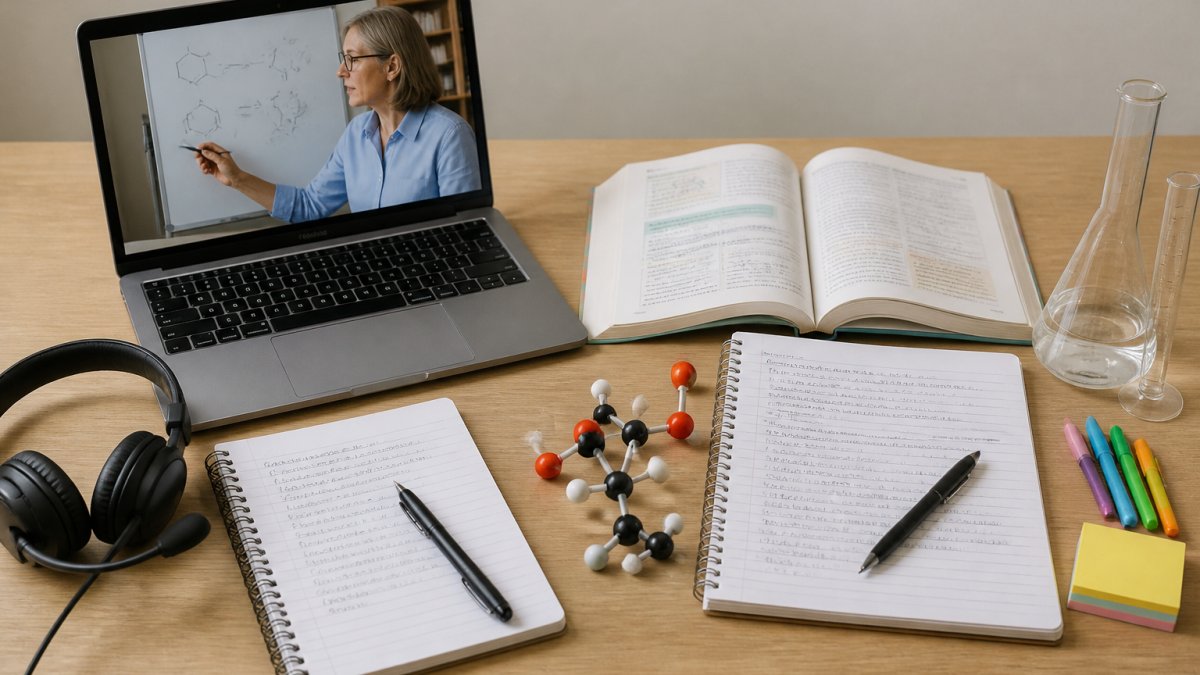
Organic chemistry tutoring focuses on the specific challenges that make this subject difficult for most college students. Rather than generic test prep, a tutor helps you understand reaction mechanisms, predict product outcomes, and connect abstract concepts to real molecular behavior.
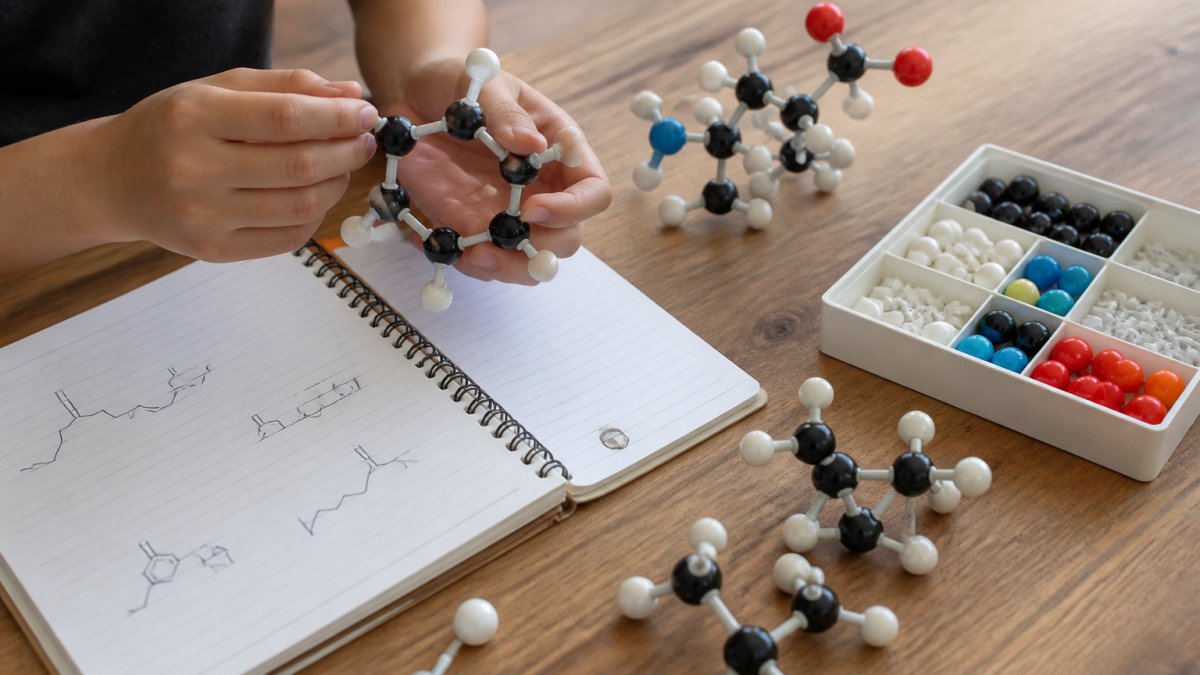
Many students struggle not because they lack intelligence, but because organic chemistry requires visualizing molecules in three dimensions, recognizing patterns across hundreds of reactions, and applying logic to predict unfamiliar outcomes. A skilled tutor breaks this down into manageable pieces.
What tutoring typically covers:
- Reaction mechanisms and electron movement
- Stereochemistry and molecular structure
- Synthesis strategies and retrosynthetic analysis
- Exam-specific problem types and time management
Chemistry Lessons by Annise specializes in exactly this kind of targeted support. With over 30 years of experience and more than 1,000 students successfully tutored, Annise understands the specific points where college students get stuck.
Benefits of Organic Chemistry Tutoring for Course Performance
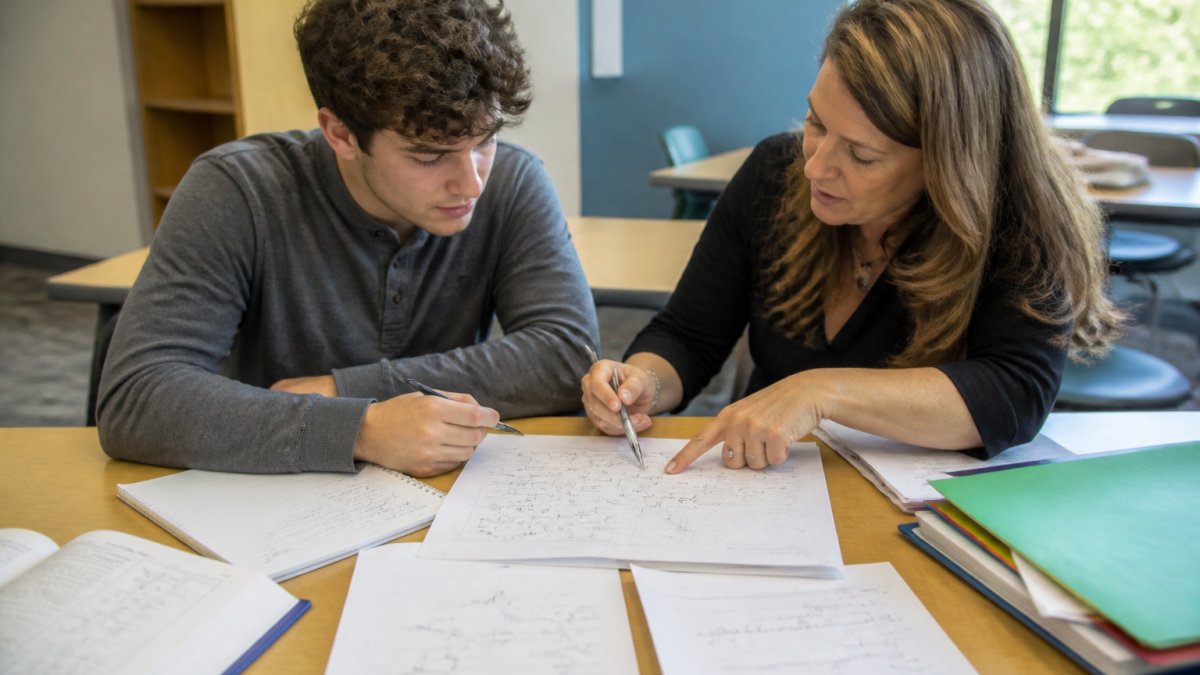
One-to-one instruction identifies your exact knowledge gaps instead of reviewing material everyone already understands.
Understanding the "why" behind reactions, not just memorizing steps, makes exam problems predictable rather than overwhelming.
Common improvements students report:
- Improved academic grades
- Increased confidence on exams and quizzes
- Ability to tackle unfamiliar problem types
- Better performance on cumulative exams
The confidence boost matters as much as the grade boost. Many students enter organic chemistry convinced they're not "chemistry people," but a tutor who explains concepts clearly shows them the subject is learnable.
Organic Chemistry Tutoring vs. Studying Alone: What Changes
Studying alone means you encounter a problem, get stuck, and either skip it or spend an hour going in circles. A tutor interrupts that cycle immediately, spotting where your thinking derailed and redirecting you without simply giving you the answer.
This differs from group tutoring or office hours, where you compete for attention and often don't get specific clarification. One-to-one tutoring means every minute addresses your actual confusion.
How tutoring changes your approach:
- You learn to ask better questions instead of just feeling lost
- You understand the logic behind reactions, not just memorization tricks
- You build problem-solving strategies that work for new material
- You get real-time feedback on your thinking process
Regular sessions also keep you accountable to learning consistently rather than cramming, producing better long-term retention.
How to Choose an Organic Chemistry Tutor That Fits Your Needs
Look for someone with deep subject expertise who has actually taught chemistry, not just passed it, and can explain concepts in a way that makes sense to you.
Key qualities to evaluate:
- Subject expertise: Do they understand organic chemistry at a research or teaching level?
- Teaching ability: Can they explain concepts clearly, or do they assume you already understand?
- Flexibility: Will they adjust their approach based on how you learn best?
- Availability: Do their schedule and location work for you?
- Communication style: Do you feel comfortable asking questions and admitting confusion?
Chemistry Lessons by Annise brings all these elements together. Annise is a former university professor and organic chemistry research scientist with over 30 years of experience, so she understands not just what to teach, but why each concept matters and how students typically misunderstand it.
Online tutoring offers flexibility, no travel time, and the ability to record sessions for review. Chemistry Lessons by Annise offers both online and in-person options on Long Island.
How Often to Meet With an Organic Chemistry Tutor
Ideal frequency depends on your current grade, available time, and how quickly you need to improve.
Students who are failing or barely passing benefit from weekly sessions, sometimes twice weekly during exam prep. Students with a C grade often improve with biweekly sessions. Students aiming to move from B to A typically need monthly check-ins plus intensive prep before exams.
Duration guidelines:
- Weekly sessions: 60-90 minutes per session
- Biweekly sessions: 90 minutes per session
- Monthly sessions: 2-3 hours per session
Start with weekly sessions if you're significantly behind, then reduce frequency as you gain confidence. The goal is to eventually study independently, with tutoring as occasional reinforcement.
Measuring Whether Tutoring Is Working
Progress should be visible and measurable within 2-3 weeks of consistent tutoring, moving from subjective feelings to concrete, trackable outcomes.
Measurable checkpoints to track:
Week 1-2: Foundation phase
- Can you explain why a reaction occurs (mechanism, electron movement, driving force) without looking at notes?
- On practice problems from your textbook or problem set, what percentage are you solving correctly without tutor help? Aim for 50-60% accuracy as a baseline.
- Are you asking more specific questions in tutoring sessions (e.g., "Why does this carbocation rearrange?") instead of generic ones ("I don't get this")?
If yes, tutoring is clarifying your thinking. If no, the tutor may be giving answers rather than teaching reasoning.
Week 3-4: Application phase
- On quiz or exam problems similar to ones you've reviewed with your tutor, what's your accuracy? Compare this to your pre-tutoring baseline.
- Can you solve a new problem type (one you haven't seen in tutoring) using the logic your tutor taught you? This is the real test, memorizing solutions doesn't transfer.
- On cumulative problem sets, are you catching your own mistakes before submitting, or are you still making the same errors repeatedly?
Week 5-6: Independence phase
- Are you spending less time stuck on problems, or the same amount? Tutoring should reduce time-to-solution as you internalize patterns.
- On homework or practice exams, what percentage of problems can you attempt without immediately texting your tutor or looking up the answer? Aim for 70%+ independent attempts.
- When you do get stuck, can you identify what you don't understand (e.g., "I don't see why this is the major product") rather than just feeling lost?
Red flags that tutoring isn't working:
- After 4-6 weeks of weekly sessions, your quiz or exam scores haven't improved compared to pre-tutoring performance.
- You're scoring well on problems your tutor has walked you through, but your actual exam scores remain flat. This signals you're memorizing solutions, not learning transferable reasoning.
- You dread sessions because the tutor's pace, tone, or teaching style doesn't match how you learn. A mismatch in communication style will undermine progress no matter how knowledgeable the tutor is.
- You're not applying concepts from tutoring to your coursework. If tutoring feels disconnected from your actual class material, assignments, or exams, it's not aligned with your needs.
- The tutor isn't adjusting their approach based on your feedback. Good tutoring is iterative; if a method isn't working after 2-3 sessions, your tutor should pivot.
How to use these checkpoints:
Track one metric from each phase (foundation, application, independence) every 1-2 weeks. Keep a simple log: date, metric, result, and whether it's moving in the right direction. If you're not seeing progress on at least two of the three phases by week 6, have a direct conversation with your tutor about adjusting the approach or consider whether tutoring is the right fit for you at this time.
The goal of tutoring is to make you less dependent on it, not more. If you're improving on independent problem-solving and exam performance, tutoring is working. If you're only improving when your tutor is present, something needs to change.
Making the Decision: Is It Right for You?
Organic chemistry tutoring isn't necessary for every student, and it's not a substitute for effort. The real question is whether tutoring is the best use of your time and money given your specific circumstances.
1. Your current performance and grade trajectory
If you're earning an A, tutoring is probably overkill. If you're earning a B and content with that grade, tutoring may not justify the cost unless you're aiming higher for your major or graduate school.
If you're earning a C or below, tutoring becomes more valuable, especially if your grade affects your major eligibility, you're in the first half of the semester with time to recover, or you're repeating the course.
If you're failing (D or F), tutoring is urgent but only if you start now, waiting until week 10 of a 15-week semester limits what's possible.
2. Your study habits and self-discipline
Tutoring only works if you're willing to do the work between sessions. Do you complete assigned homework and practice problems, focus for 60-90 minutes without distractions, and review tutoring notes independently?
If you're not completing coursework or practicing independently, tutoring will feel frustrating and expensive. If you're disciplined, tutoring multiplies that effort.
3. Your chemistry foundation and prior experience
Students with weak general chemistry skills need more tutoring support because they're building two layers of understanding at once. Tutoring earlier in the semester is more valuable if you struggled in general chemistry.
Conversely, if you have strong chemistry fundamentals and are only stuck on specific organic topics (e.g., stereochemistry or synthesis), you may need fewer sessions or more targeted help rather than ongoing weekly tutoring.
4. Available alternatives and their cost
If you've tried these and still feel stuck after 3-4 weeks, private tutoring becomes reasonable.
5. Your budget and the cost-benefit calculation
Before committing, consider the cost of repeating the course if you fail, whether you can afford tutoring without financial strain, whether your college covers tutoring costs, and your realistic return on investment.
Decision framework:
Tutoring makes the strongest case when all of these are true:
- Your grade is C or below, or you're failing.
- Your GPA or major eligibility is at stake.
- You've tried free alternatives (office hours, peer tutoring, study groups) and still need help.
- You're willing to do independent practice between sessions.
- You can afford it without financial hardship, or your college covers the cost.
- You're early enough in the semester to benefit from sustained tutoring (not week 14 of 15).
Tutoring is less compelling if:
- You're earning a B or higher and content with that grade.
- You haven't tried free campus resources yet.
- You're not completing homework or practicing independently.
- You're waiting until the last 2-3 weeks of the semester.
- You're hoping tutoring will substitute for your own effort.
The bottom line:
Organic chemistry tutoring is a tool, not a magic fix. It works best for students who are struggling, willing to work, and positioned early enough in the semester to benefit from sustained support.
Frequently Asked Questions
How can I tell if I need an organic chemistry tutor?
Consider tutoring if you're earning below your target grade after studying independently, struggling to visualize reaction mechanisms, or feeling anxious before exams despite preparation. A tutor helps most when you've tried standard study methods without results. Test anxiety, gaps in foundational chemistry, or difficulty connecting concepts to problem-solving are strong indicators that personalized instruction would help clarify material and build confidence.
What should I look for in an organic chemistry tutor?
Prioritize subject expertise, specifically experience teaching college-level organic chemistry, not just general chemistry. Verify their teaching approach matches your learning style, whether that's visual explanations of mechanisms, hands-on problem-solving, or exam-focused strategies. Check references or testimonials from students in similar courses. Flexibility with scheduling and the ability to explain concepts multiple ways matter equally; credentials alone don't guarantee effective teaching.
How often should college students meet with an organic chemistry tutor?
Most students benefit from weekly one-hour sessions during the semester, though frequency depends on your course pace and performance. If you're significantly behind, twice-weekly sessions accelerate progress. As exams approach, increasing to two sessions weekly helps consolidate material. Start with weekly meetings and adjust based on your grade trends and confidence level. Consistency matters more than intensity, regular contact prevents gaps from widening.
Can tutoring help if I've already fallen behind in organic chemistry?
Yes, but recovery requires honest assessment and commitment. A tutor can identify specific knowledge gaps, whether you're weak on foundational concepts, reaction mechanisms, or synthesis problems, and target those directly. Expect steady improvement in exam performance. Success depends on your willingness to practice between sessions and your tutor's ability to adjust pacing. Even students significantly behind have improved grades with focused, personalized instruction.
Chemistry Lessons by Annise transforms student confusion into confidence through personalized, expert-led tutoring. With a former university professor and organic chemistry research scientist guiding you, you'll master complex concepts and improve your grades. Request a lesson today and see how tailored instruction can change your chemistry performance.