 blog
How to Study Organic Chemistry: 7 Tips for Pre-Med Students
Last Updated: October 25, 2026
Quick Summary
The best organic chemistry study approach is to pre-study before lectures, review within 24 hours, and work practice problems at least twice a week. Build your organic chemistry study plan around the syllabus, using short frequent sessions of roughly three hours across six days instead of one long cram.
- Map every exam, quiz, and problem set date from your syllabus, then work backward to plan each week.
- Spend 20 minutes before each new chapter reviewing bonding, electronegativity, acids and bases, and molecular geometry.
- Attempt practice problems before checking solutions, then log every miss and redo it a few days later.
- Start timed practice sets two weeks before each exam, beginning with open notes and finishing closed notes.
- Learn reaction families and electron flow patterns instead of memorizing hundreds of reactions by rote.
Table of Contents
- 1. Build Your Organic Chemistry Study Plan Around the Course Calendar
- 2. Review Chemistry Basics Before Each New Unit
- 3. Learn Functional Groups and Carbon Bonding as One System
- 4. Work Organic Chemistry Practice Problems Every Week
- 5. Learn How to Memorize Organic Chemistry Reactions by Pattern, Not by Rote
- 6. Use Active Recall and Spaced Repetition to Make It Stick
- 7. Plan Organic Chemistry Exam Preparation Around Error Analysis
- Request a Lesson and Build a Study Routine That Fits Your Course
- Frequently Asked Questions
1. Build Your Organic Chemistry Study Plan Around the Course Calendar
The best organic chemistry study plan starts with your syllabus, not a generic template.
Here's the core tension: most pre-med students treat organic chemistry study as something that happens after lectures. The students who do well flip that order.
A common mistake is building a schedule around "hours per week" instead of "units per week." Hours are vague. Units are concrete.
What a Realistic Weekly Schedule Looks Like
A workable organic chemistry study plan runs on short, frequent sessions rather than one long cram. The schedule below assumes a standard fall or spring term with one midterm and a final, and it totals roughly three hours across six days:
- Monday: 30 minutes reviewing last week's notes and reworking two missed problems
- Tuesday: 45 minutes on new functional groups, drawing each one attached to a carbon chain
- Wednesday: 30 minutes of practice problems from the current chapter
That's roughly three hours spread across six days. Consistent studying beats marathon sessions every time.
How to Scale the Plan Around Exam Weeks
A fixed schedule breaks the moment two exams land in the same week. Build in a scaling rule instead:
- Normal week: three hours as above
- Week before an exam: add one 60-minute timed practice set and one 30-minute error-log review
- Exam week: cut new content entirely and spend the time on missed problems and mechanism redraws
This is the part most guides skip. A plan you can shrink and stretch survives a busy semester; a rigid one gets abandoned by October.
Separating Course Depth from MCAT Review
Pre-med students face a specific tension: your professor may test named reactions and stereochemistry details the MCAT never touches, while the MCAT tests broad reasoning your course may skim.
A practical split:
- Course track: full mechanism drawing, named reactions, and professor-specific problem sets
- MCAT track: functional group recognition, reaction pattern prediction, and passage-based reasoning
- Shared core: functional groups, bonding, resonance, and acid-base reasoning serve both
When the two tracks overlap, study once and log it in both places. When they diverge, protect the course grade first, the MCAT rewards a strong foundation, and a rushed course leaves gaps that are harder to repair later.
That's roughly three hours spread across six days. Consistent studying beats marathon sessions every time.
2. Review Chemistry Basics Before Each New Unit
Organic chemistry builds on general chemistry basics: bonding, electronegativity, acids and bases, and molecular geometry.
Spend 20 minutes before each new chapter reviewing the foundational concepts it depends on. The American Chemical Society's education resources offer free refreshers on core chemistry topics.
This is where pre-med students often fall behind. They push through without solid fundamentals, then wonder why reaction mechanisms feel like guesswork. They aren't guessing at mechanisms.
3. Learn Functional Groups and Carbon Bonding as One System
Functional groups and carbon bonding are not separate topics to memorize in isolation. They're one connected system, and treating them that way cuts your study time substantially.
Carbon bonding explains why molecules have the shapes they do. Functional groups explain how those shapes react.
A practical approach:
- Draw each functional group attached to a simple carbon chain
- Note how electronegativity shifts electron density
- Predict which part of the molecule will react
What most guides miss is that functional group memorization without bonding context fades fast. The visual connection is what makes it stick.
4. Work Organic Chemistry Practice Problems Every Week
Organic chemistry practice problems matter more than rereading notes. Reading feels productive. Solving problems proves whether you actually understand the material.
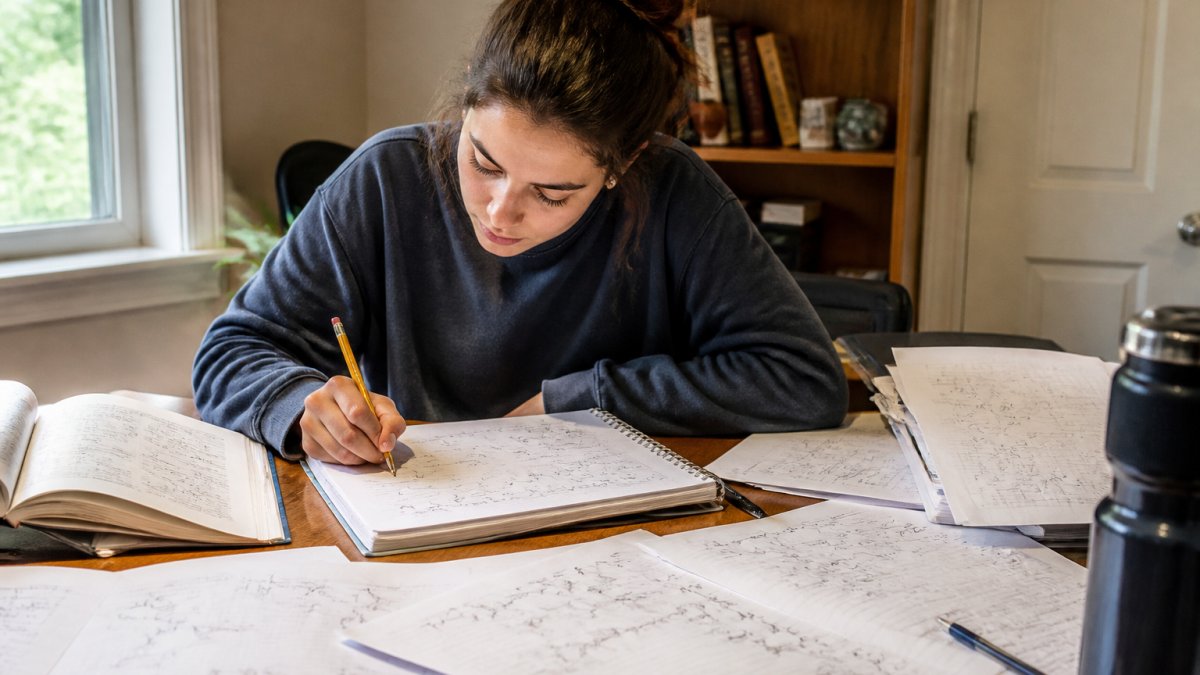
Aim for problem sets at least twice a week, and always attempt them before checking solutions. The struggle is the learning.
(https://blog.chemistrytutoringbyannise.com/is-organic-chemistry-tutoring-worth-it-college-students) walks through that trade-off.Building a Timed Practice Habit Before Exams
Untimed practice builds understanding; timed practice builds exam performance. Both matter, and most students only do the first.
Start timed sets two weeks before each exam:
- Week one out: one 30-minute set of 10-12 problems, open notes, focusing on pace
- Exam week: one 50-minute set under exam conditions, closed notes, no phone
- After each set: score it, log every miss, and redo the missed problems untimed the next day
A common pattern is students who can solve every problem at home but run out of time on the exam. The fix is practicing under the clock before it counts.
Turning Missed Problems into Targeted Review
Every wrong answer is a signal pointing to a specific gap. Keep an error log with three columns:
| What went wrong | Why it happened | The fix |
|---|---|---|
| Drew the wrong product | Missed the leaving group order | Review substitution patterns |
| Lost points on stereochemistry | Forgot to check wedges and dashes | Add a stereochemistry check step |
| Ran out of time | Stalled on mechanism arrows | Practice timed problem sets |
| Misread the reagent | Skipped reagent identification | Highlight reagents first |
Before each exam, review the log instead of the textbook. Patterns in your errors tell you exactly where to focus. If test-day nerves are part of the problem, our article on overcoming test anxiety in chemistry covers practical steps that pair well with content review.
5. Learn How to Memorize Organic Chemistry Reactions by Pattern, Not by Rote
Students often ask how to memorize organic chemistry reactions. The honest answer: you don't memorize hundreds of reactions. You learn a smaller set of patterns and apply them.
Reactions group into families. Nucleophilic substitution, elimination, addition, and oxidation-reduction each follow predictable electron flow. Once you recognize the pattern, new reactions become variations rather than new facts.
A Step-by-Step Method for Solving Reaction Mechanisms
Use this sequence every time you face an unfamiliar mechanism:
- Label the nucleophile and electrophile. Find the electron-rich and electron-poor sites.
- Track the electrons, not the atoms. Draw curved arrows from electron source to destination.
- Check formal charges at every step.
- Ask what's stable. Full octets and lower charge drive the reaction forward.
- Name the pattern. Match it to a reaction family you already know.
- Verify the product makes chemical sense.
This method turns mechanism problems from recall tests into reasoning exercises.
6. Use Active Recall and Spaced Repetition to Make It Stick
Active recall means testing yourself before you feel ready. Spaced repetition means revisiting material at growing intervals. Together, they beat passive rereading by a wide margin.
Try this system:
- Turn each functional group and reaction pattern into a question card
- Review cards after one day, three days, one week, then two weeks
- Mix old and new cards in every session
Drawing structures from memory is active recall in its purest form. It exposes gaps that highlighting never will.
For students who want to go deeper on reaction patterns, our guide on alternatives to memorizing organic chemistry reactions walks through the reasoning-first approach in more detail.
7. Plan Organic Chemistry Exam Preparation Around Error Analysis
Organic chemistry exam preparation should center on your mistakes, not on more content. Every wrong answer is a signal pointing to a specific gap.
Keep an error log with three columns:
| What went wrong | Why it happened | The fix |
|---|---|---|
| Drew the wrong product | Missed the leaving group order | Review substitution patterns |
| Lost points on stereochemistry | Forgot to check wedges and dashes | Add a stereochemistry check step |
| Ran out of time | Stalled on mechanism arrows | Practice timed problem sets |
| Misread the reagent | Skipped reagent identification | Highlight reagents first |
Before each exam, review the log instead of the textbook. Patterns in your errors tell you exactly where to focus.
If test-day nerves are part of the problem, our article on overcoming test anxiety in chemistry covers practical steps that pair well with content review.
Request a Lesson and Build a Study Routine That Fits Your Course
Building a study routine that actually fits your course load, your professor's exam style, and your schedule is the hardest part of organic chemistry study.
At Chemistry Lessons by Annise, we build that routine with you.
Not sure whether personalized help is worth it? Read is organic chemistry tutoring worth it for college students before you decide.
Get started with Chemistry Lessons by Annise and turn confusion into confidence this semester.
Frequently Asked Questions
How many hours should I study organic chemistry each week?
Most students need about two to three hours of focused study for every hour of lecture, so a typical three-credit course calls for six to nine hours a week outside class. Spread those hours across four or five short sessions instead of one long cram. Short, frequent sessions keep mechanisms fresh and leave room for practice problems, which matter more than rereading notes. If you are behind, add one extra problem session each week until you catch up.
How do you memorize organic chemistry reactions effectively?
Group reactions by mechanism rather than memorizing them one at a time. Learn the electron flow for each pattern, then list the reagents and products that follow from it. Build flashcards that ask you to predict the product from a starting structure and reagents, not cards that only name a reaction. Review those cards on a spaced schedule and redraw the mechanism from memory. This approach turns dozens of separate reactions into a handful of patterns you can apply to new problems.
Should I use flashcards to study organic chemistry?
Yes, but make them active. Cards that ask you to draw a mechanism, predict a product, or explain why a reagent works force recall instead of recognition. Keep cards short and review them on a spaced schedule so older material resurfaces before you forget it. Pair flashcards with weekly practice problems, because cards build recall while problems build the problem-solving speed exams reward. Used together, they cover both the memorization and the application sides of the course.
How do I prepare for an organic chemistry exam without cramming?
Start exam preparation at least a week out with a practice test under timed conditions. Grade it honestly, then sort every miss into one of three causes: a forgotten fact, a mechanism you could not draw, or a misread question. Spend your remaining study time on the largest category. Redo the missed problems two days later and again the night before the exam. This error analysis shows you exactly what to fix instead of reviewing material you already know.